Analytics6 min read
How to Find Where Your Outbound Sequence Leaks
Reply rate alone hides the problem. Read your outbound funnel one step at a time, find the step losing people, and fix that first.
 ReacherPro TeamProduct & growth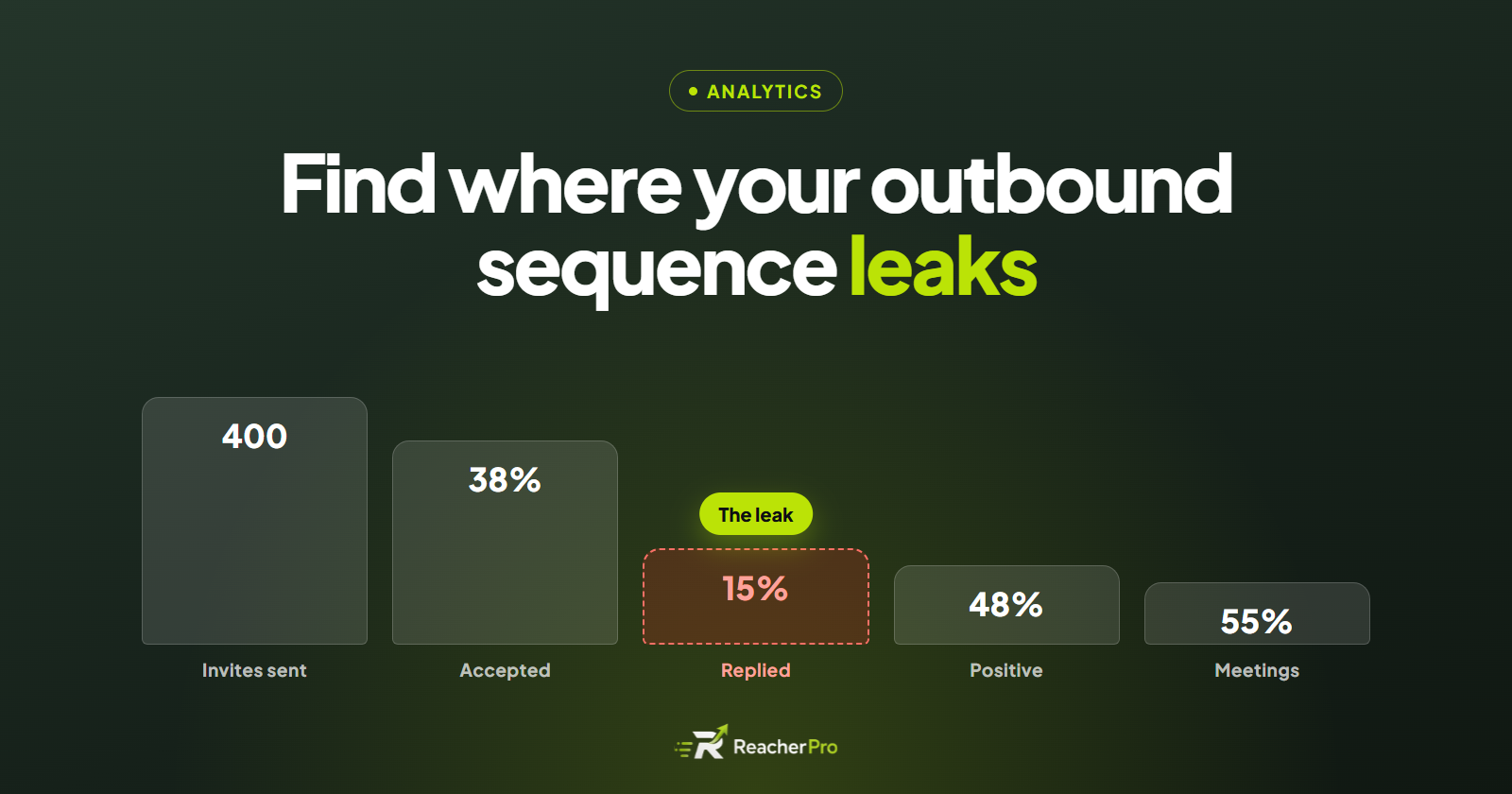
Most outbound reviews start and end with one number: "our reply rate is down." It is a fair worry, and almost no help. A falling reply rate can mean the wrong people are on the list, the invitation is ignored, the follow-up falls flat or the replies are coming back as "not interested" — and each of those has a different fix.
A sequence is a chain of steps, and every step loses some people. The useful question is not how many replied but where people drop out. This guide shows how to read the funnel one step at a time, how to tell what a weak step is telling you, and why fixing the biggest leak first beats polishing everything at once.
The five numbers that matter
A LinkedIn-led sequence has five stages, each a subset of the one before:
- Invites sent — connection requests that went out.
- Accepted — people who accepted.
- Replied — people who answered a message.
- Positive — replies that showed interest.
- Meetings booked — conversations that became a call.
The totals on their own say little. What matters is the step conversion: how many people at each stage made it to the next. Divide each stage by the one before it, not by invites sent.
Reading the funnel: a worked example
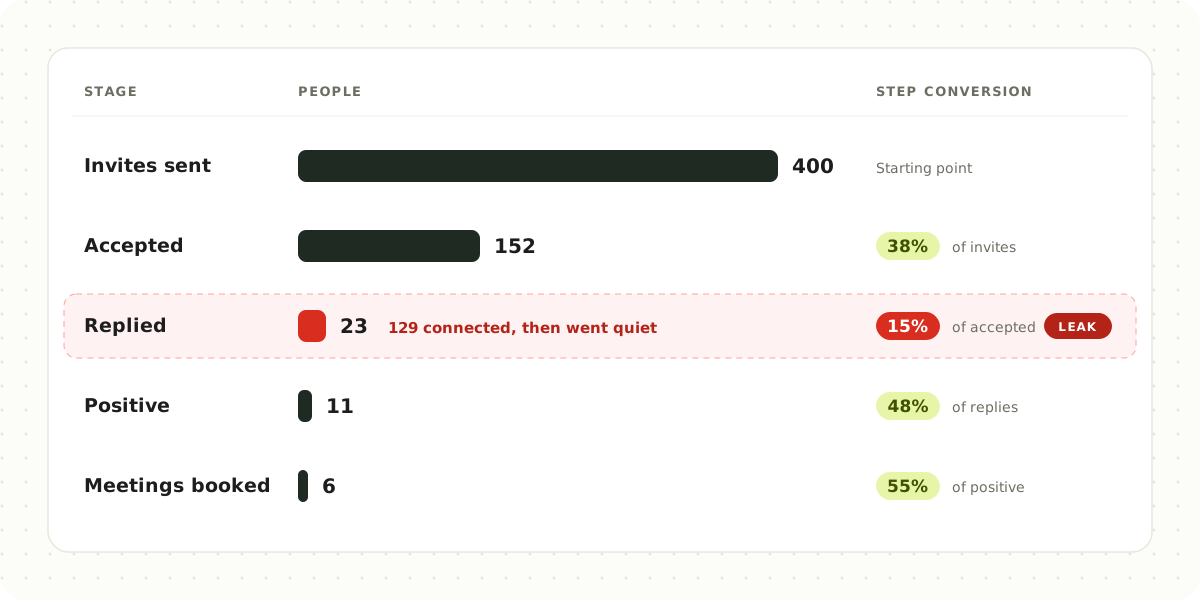
Here is one illustrative month for a single seat:
| Stage | People | Step conversion |
|---|---|---|
| Invites sent | 400 | — |
| Accepted | 152 | 38% of invites |
| Replied | 23 | 15% of accepted |
| Positive | 11 | 48% of replies |
| Meetings booked | 6 | 55% of positive replies |
Measured against invites sent, this seat books 1.5% — a number that says "something is wrong" but not what. Step by step, the story is clear. People accept the invitation, and the ones who reply are interested and book. The leak is between accepted and replied: 129 people connected and then ignored the follow-up.
That points at one thing to fix — the first message after acceptance — rather than the list, the invitation note or the call-booking process, all of which are doing their job.
Fix the biggest leak first
Every stage feeds the next, so a better rate at any step lifts every number after it. In the example, getting the follow-up from 15% to 30% of accepted connections, with everything else unchanged, roughly doubles the result:
| Stage | Before | After the fix |
|---|---|---|
| Accepted | 152 | 152 |
| Replied | 23 | 46 |
| Positive | 11 | 22 |
| Meetings booked | 6 | 12 |
Because the steps multiply, doubling any one of them would double the meetings. In practice they are not equally easy to move:
- A weak step has room to grow. Taking the follow-up from 15% to 30% is realistic. The booking step, already at 55%, cannot double.
- Earlier steps act on more people. Fifteen more percentage points on the follow-up adds about six meetings here. The same fifteen points on booking adds fewer than two, because only eleven people ever reach that step.
So start with the step furthest below where it should be. When two steps look equally weak, fix the earlier one.
What each weak step usually means
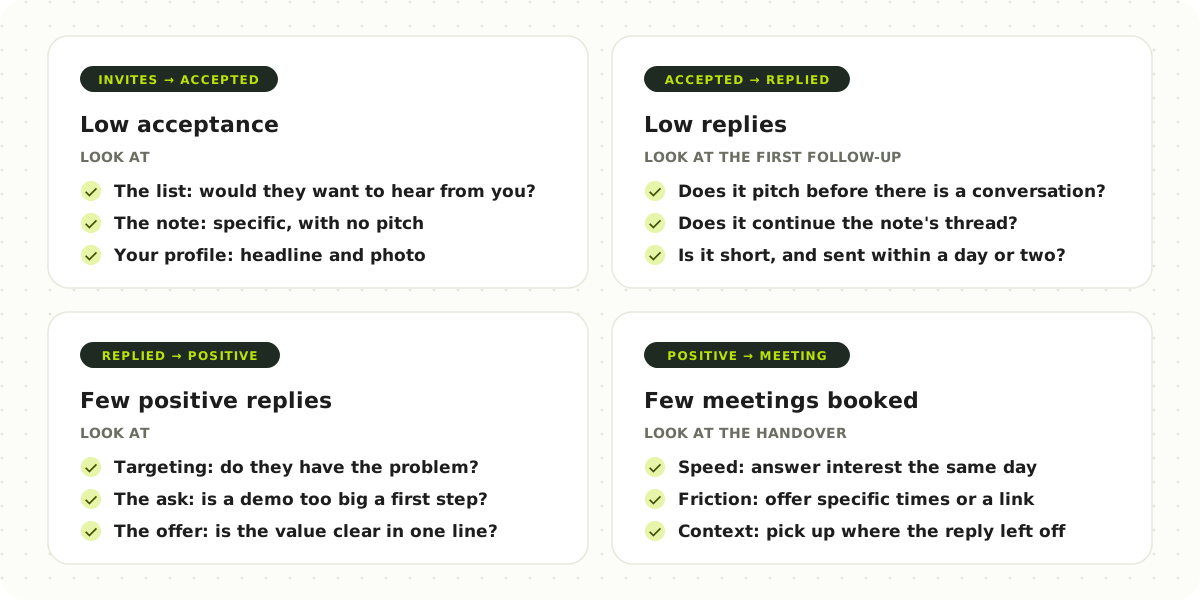
Each stage has its own usual suspects. Use this as a starting point for a hypothesis, not a verdict:
Low acceptance
People see your request and decline or ignore it. Check, in this order:
- The list. Are these people who would plausibly want to hear from you? A broad list drags acceptance down before the note is even read.
- The note. A generic or pitchy note gets ignored. Our guide to connection notes that get accepted covers what works.
- The profile. Prospects check who is asking. An empty headline or no photo costs acceptances.
Low replies after acceptance
They connected, then went quiet. This is almost always the first follow-up:
- It pitches too soon. Acceptance is permission to talk, not to sell.
- It ignores the note. Continue the thread the invitation started, instead of starting over.
- It is too long, or arrives too late. A short message a day or two after acceptance beats a long one a week later.
Few positive replies
People reply, but mostly to say no. The message is getting read; the offer or the fit is wrong:
- The targeting is off. You are reaching people without the problem you solve.
- The ask is too big. A 30-minute demo is a large first request. A question or a useful resource is easier to say yes to.
- The offer is vague. If you cannot say what you help with in one line, the reader cannot either.
Few meetings from positive replies
Interested people are not booking. This is a handover problem, not a messaging one:
- Slow responses. Interest cools fast. Positive replies need an answer the same day.
- Friction. Offer two or three specific times, or a booking link, instead of "when works for you?".
- Lost context. Answer what they actually said, rather than restarting with a pitch.
Read the numbers honestly
A funnel is only useful if the numbers behind it mean something:
- Wait for enough volume. A step built on a handful of people swings wildly. Judge a change once a few dozen people have passed through that step.
- Compare like with like. Put this week next to last week, not next to a holiday week or a different audience.
- Change one thing at a time. Rewrite the follow-up or tighten the list, not both, or you will not know which one worked.
- Ignore activity as a goal. Invites sent is an input. Sending more into a leaking step just loses more people.
- Look at timing too. When replies arrive tells you when your follow-ups are most likely to be read.
A 15-minute weekly review
- Open the funnel for the last seven days.
- Work down the steps and find the one furthest below its usual rate.
- Write one sentence on why you think it is weak.
- Change one thing at that step.
- Note the change and the date, and check the same step next week.
Seeing the funnel in ReacherPro
You can build this view in a spreadsheet, but it goes stale the moment you stop updating it. The ReacherPro dashboard shows it live: stage totals from invites sent to meetings booked, how many make it to each next stage, and which step is converting worst — for today, the last seven days or the last thirty. It also shows when replies tend to arrive, so you can time follow-ups to match.
When the weak step is the follow-up, campaigns let you change it without starting over: branch on what each prospect does, and reply from the combined inbox while interest is fresh. See every feature.
Find the leak, fix that one step, then look again. It beats rewriting the whole sequence every time the numbers dip.