Prospecting5 min read
How to Write an AI Lead List Prompt That Works
An AI lead list is only as good as the sentence behind it. Watch one vague prompt become a precise one in four rounds, then check the list before launch.
 ReacherPro TeamProduct & growth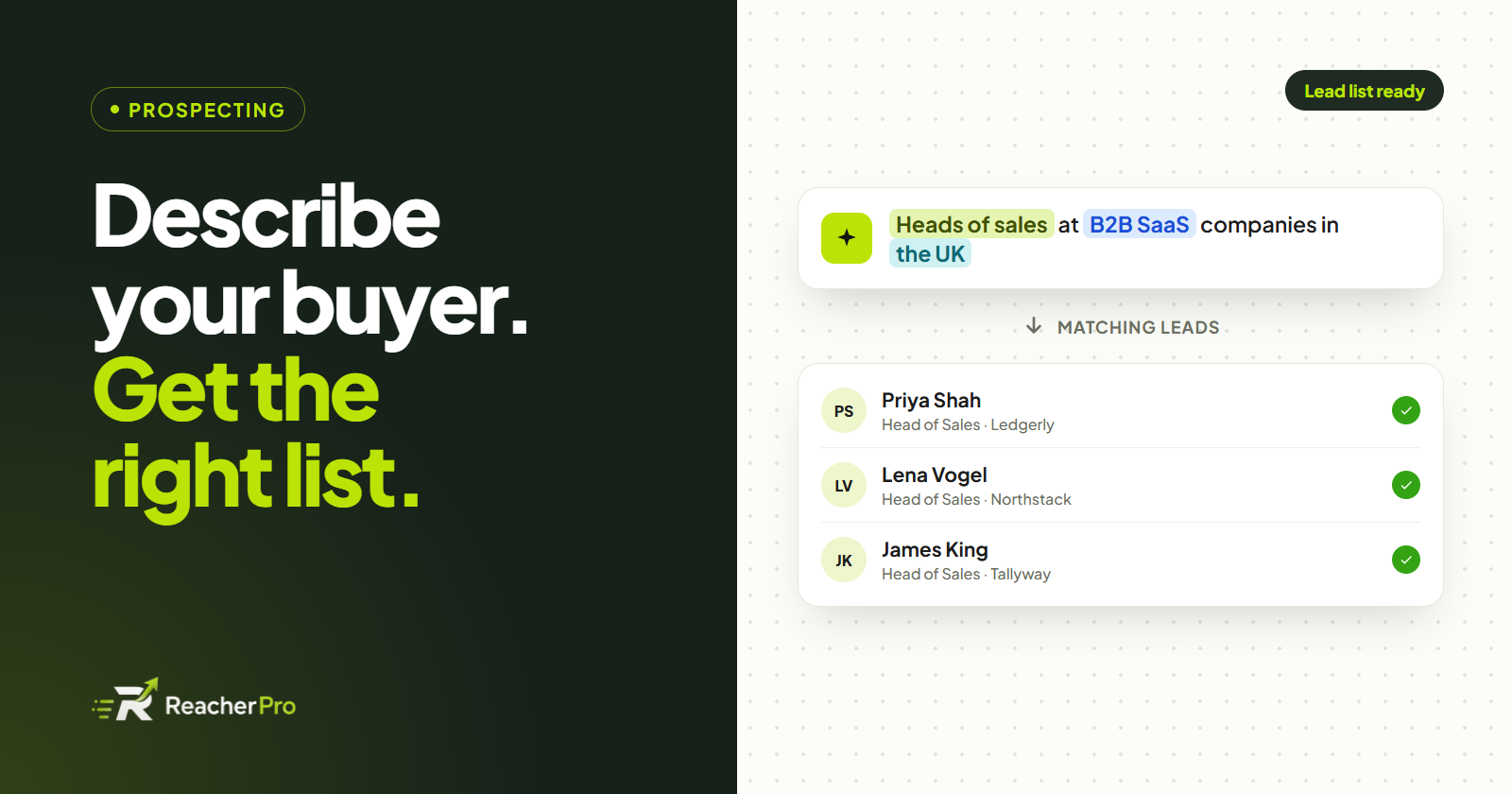
Here is a prompt most sales teams start with:
Sales people in tech.
It looks reasonable. It is also the reason so many first campaigns go nowhere. Ask an AI list builder for "sales people in tech" and it will do exactly that: every rep, every manager and every executive, at every software company of every size, anywhere in the world. A sequence sent to that list reaches plenty of people and almost none of the right ones.
Rather than list rules, let's fix this one prompt, one round at a time, and see what each change does to the list.
Round 1: Name the person, not the market
"Sales people" describes a department. A list is made of individuals, and the most important thing about them is whether they can say yes to what you sell.
Heads of sales in tech.
One change, and the list shrinks from a whole department to the people who own the number and the budget. If your offer is for the people who feel the problem day to day rather than the ones who sign, name them instead: "sales managers", "SDR team leads". The point is to choose.
Round 2: Draw the edges of the market
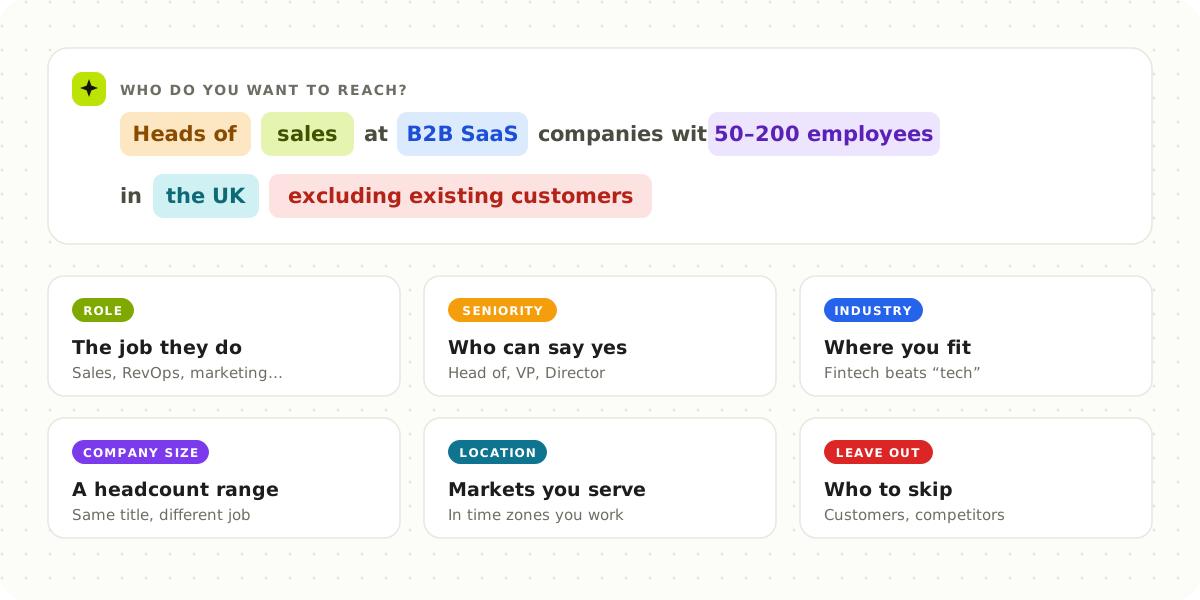
"Tech" still covers everything from chip makers to two-person app studios. Three facts usually decide whether a company can actually buy from you: what it does, how big it is, and where it is.
Heads of sales at B2B SaaS companies with 50–200 employees in the UK.
Each addition does a specific job. B2B SaaS keeps the market to companies your product fits. 50–200 employees keeps the job comparable: a head of sales at a 20-person startup and one at a 5,000-person enterprise do very different work. The UK keeps the list to a market you can serve, in a time zone you can actually work in.
Round 3: Say who to leave out
The prompt now describes who you want. The last round removes who you don't: the people who should never receive a cold message from you.
Heads of sales at B2B SaaS companies with 50–200 employees in the UK, excluding existing customers.
Existing customers, competitors and anyone already in another campaign are the usual exclusions. Leaving them in is how a cold "nice to meet you" lands in the inbox of someone who has paid you for two years.
Round 4: Split it if it describes two audiences
Read the finished prompt once more and ask: would I send everyone on this list the same message? If the honest answer is "mostly", the prompt is hiding two audiences.
Heads of sales and heads of marketing at the same companies care about different things, and one message cannot speak to both. Write two prompts, build two lists, and run two campaigns. Each message gets sharper, and when one campaign underperforms you know which audience it was.
Before you launch: the 20-lead spot-check
A precise prompt gets you most of the way. Five minutes of checking gets you the rest.
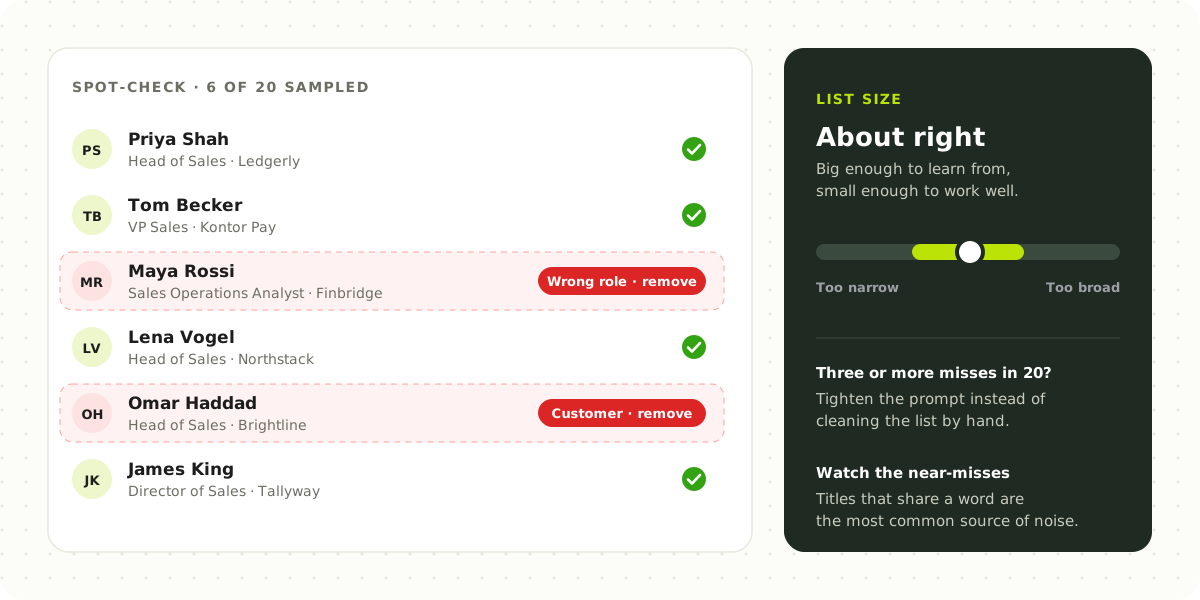
Open twenty leads from across the list — not just the first page — and read each title. You are looking for two things.
The first is near-misses: titles that share a word with the one you asked for but describe a different job. "Sales operations analyst" is not "head of sales". If three or more of your twenty miss like this, don't clean the list by hand; go back and tighten the prompt, because the same miss is repeated hundreds of times further down.
The second is size. A list in the tens of thousands almost always means a missing edge from round 2. A list of a dozen usually means one filter too many. The right size is one your team can work properly, with messages written for the people on it.
Quick answers
How long should the prompt be?
One sentence. Most good prompts name a seniority, a role, an industry, a company size, a location and an exclusion. Anything longer is usually two audiences.
Should I write exact job titles?
Describe the role and seniority ("heads of sales") rather than listing every variant. Then use the spot-check to catch titles that slipped through.
What if the list comes back too small?
Remove the most restrictive edge first, usually company size or location, and run it again. Change one thing at a time so you can see what each edge was costing you.
When should I revisit the prompt?
Whenever a campaign's acceptance rate drops. The list is the first suspect, before the message. Our guide to finding where your sequence leaks shows how to tell the two apart.
From prompt to campaign in ReacherPro
In ReacherPro, this whole process starts with the sentence. Type the audience in plain language and ReacherPro builds the lead list, with each lead's data laid out clearly for the spot-check. The finished list goes straight into a campaign that runs on LinkedIn and email, with every reply in one inbox. When the list is ready, the next thing to write is the invitation: here is how to write connection notes that get accepted.